
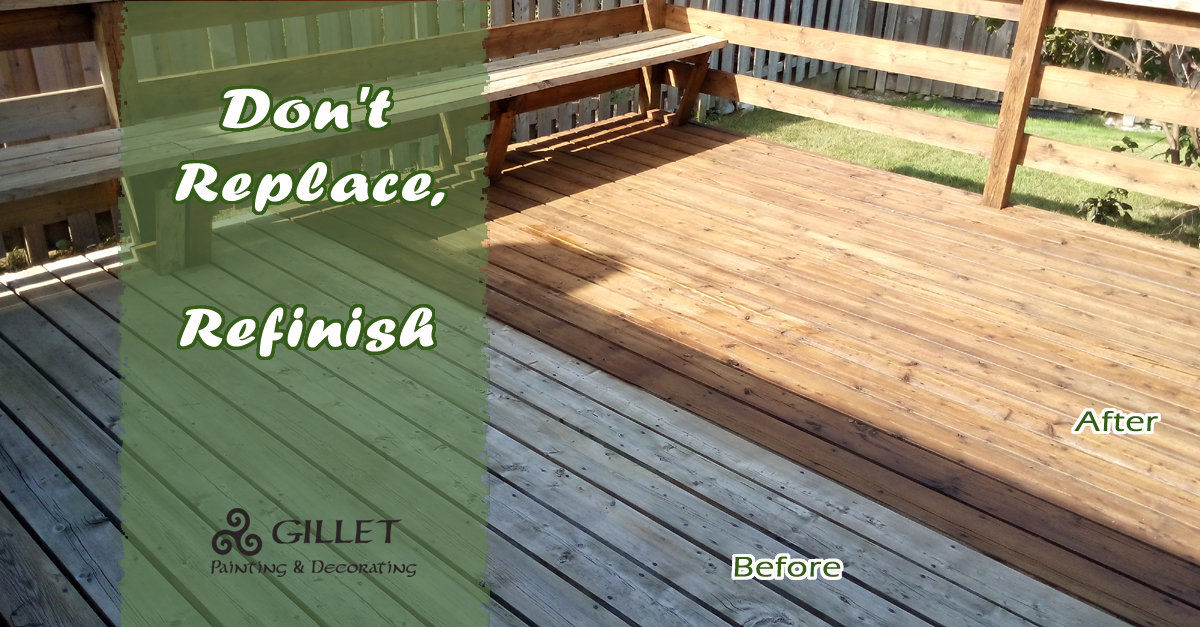
Grey wood and failing stain do not automatically mean a deck has reached the end of its life. Refinishing may restore protection and appearance, but only after the structure, moisture and coating history have been assessed honestly.
The original Gillet article documented a roughly 20-year-old deck that was renewed rather than discarded. Some boards were repositioned, the surface was prepared and a new finish was applied. The project remains a useful example of what refinishing can accomplish when the underlying structure is still serviceable.
Appearance is not the same as structural condition
Weathered colour can look dramatic while the wood remains usable. Conversely, a deck may look acceptable from above while joists, ledger connections or stair components are deteriorating.
A coating contractor can assess surface condition, but structural concerns belong with a qualified deck contractor, carpenter or engineer as appropriate. Refinish work should not conceal:
- Rot at the ledger, posts, beams or stair stringers
- Loose or corroded structural connections
- Unsafe guards, stairs or handrails
- Major movement or settlement
- Boards too deteriorated to hold fasteners
- Drainage problems that keep framing wet

When refinishing is usually realistic
Renewal is a good candidate when the framing is sound, most boards remain serviceable and the primary problems are weathering, dirt, failed coating, surface checking or a limited number of damaged boards.
Refinishing can make sense when:
- The wood is grey but not soft or deeply decayed
- Previous stain can be removed or made compatible with the new system
- Fasteners can be reset or replaced where needed
- Individual boards can be repaired, flipped or replaced
- Moisture conditions allow the wood to dry properly
- The owner accepts that old wood will retain some age and variation
When replacement deserves serious consideration
Replacement may be more responsible when repairs would be extensive, structural components are compromised or the existing design no longer meets the household’s needs.
Warning signs include:
- Widespread rot or insect damage
- Repeated coating failure caused by trapped moisture
- Unsafe framing or guards
- Large areas of split, cupped or unstable decking
- A layout that requires major reconstruction anyway
- Repair labour approaching the value of a properly rebuilt deck
The previous coating determines the preparation
A transparent penetrating stain, solid stain, paint and film-forming deck coating do not fail in the same way. The new product must be compatible with what remains after preparation.
Simply applying another coat over peeling or uneven material can create a darker, thicker and less stable surface. The scope may require cleaning, stripping, sanding or a combination, followed by enough drying time for the selected product.
Washing is not the same as damaging the wood
Cleaning removes dirt, biological growth and loose weathered fibres. Excessive pressure can scar soft wood, raise fibres and force water into joints. The method should be adjusted to the species, age and condition of the deck rather than using maximum pressure as a universal solution.
Cleaning products and brighteners need to be used according to their instructions and thoroughly rinsed. Nearby plants, metal and finished surfaces may require protection.
Moisture decides when coating can begin
A deck can look dry on the surface while retaining too much moisture for coating. Recent rain, washing, shade and cool temperatures all affect drying time. Product instructions should govern acceptable moisture and application conditions.
Coating damp wood can trap moisture or weaken adhesion. Rushing the schedule to use one sunny afternoon may shorten the life of the entire project.
Choose the finish by maintenance expectations
Transparent or semi-transparent stain
Shows more wood variation and generally wears rather than peeling as a thick film. It may need more frequent maintenance and cannot hide mismatched repairs.
Solid-colour stain
Creates a more uniform appearance and can visually connect old and replacement boards. It also makes future failure more visible and requires careful preparation before recoating.
Paint or heavy film-forming systems
Can produce a strong colour statement but are demanding on horizontal walking surfaces. Use only products intended for the substrate and exposure.

Colour affects both appearance and heat
Dark colours can make a deck visually dramatic but may become hotter in direct sun and emphasize dust, pollen or salt residue. Lighter colours show some marks differently and may reduce the contrast with weathered surroundings.
Test colour on the actual wood. New boards, old boards and repaired areas can absorb stain differently.
Season matters, but the weather window matters more
Spring and fall can offer moderate temperatures, but neither season guarantees suitable conditions. Rain, overnight lows, dew and curing time matter. The selected product’s current technical data should determine the minimum temperature, rain-free period and return-to-service time.
What a complete refinishing estimate should state
- Who assesses and repairs structural issues
- Which boards and fasteners are included
- Cleaning, stripping and sanding methods
- The exact coating product and number of coats
- How moisture and weather conditions will be checked
- Protection of siding, plants and adjacent surfaces
- Furniture removal and return-to-service timing
- What level of colour variation should be expected
Refinishing is conservation, not magic
Renewing sound wood can extend service life and avoid unnecessary disposal. It does not make old boards structurally new or erase every crack and repair. A successful project preserves what remains useful, replaces what has failed and creates a maintenance path the homeowner can realistically follow.
Send Gillet Painting wide photographs, close-ups of failed areas and views beneath the deck where accessible. Surface refinishing can then be separated from any structural work the deck may require.

