

A faux finish is most successful when it gives the architecture more depth without making the technique itself the loudest object in the room.
The original version of this article argued that decorative finishes could transform almost any surface. That is true technically, but it is not always good design. The better question is where a layered finish has a clear role and where conventional paint would create a calmer, more durable result.
Start with the architectural reason
Before selecting a technique, identify what the surface needs to do. Decorative finishes can:
- Give a large wall more movement
- Emphasize a column, arch or fireplace
- Connect a new surface with older materials
- Introduce metallic reflection in controlled areas
- Soften an imperfect but stable substrate
- Create the visual depth of stone, aged plaster, wood or patinated metal
If the only reason is that a room feels empty, furniture, lighting or art may solve the problem more effectively.
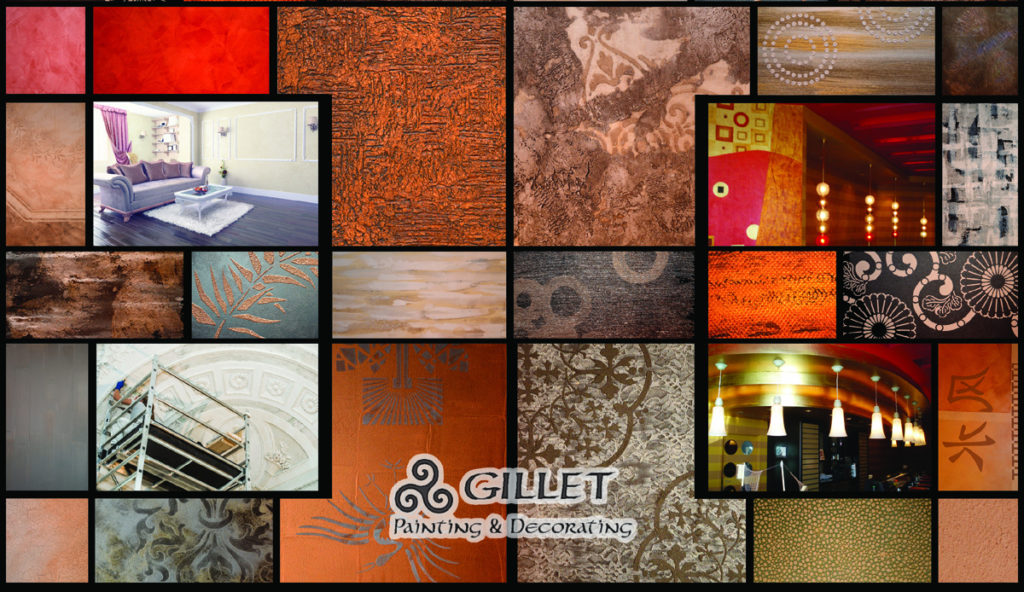
Feature walls
A feature wall works when the architecture already gives one wall greater importance: behind a fireplace, at the end of a sightline or around a built-in element. Adding a decorative finish to an arbitrary wall can feel disconnected.
Consider how furniture will cover the surface. A beautifully layered finish may not justify its cost if most of it disappears behind a large television or storage unit.
Columns, arches and mouldings
Three-dimensional details are natural candidates because a finish can reinforce their form. Faux stone, subtle metallic work, glazing or tonal plaster can make light and shadow more legible.
The scale of the pattern needs to suit the object. Large marble veining on a narrow column looks implausible; heavy glaze in every moulding recess can obscure the profile rather than reveal it.
Fireplace surrounds
A fireplace is often the visual centre of the room, but heat, combustibility and substrate requirements come first. Decorative products should only be used in locations and temperatures permitted by their manufacturers and by the fireplace assembly.
Where appropriate, a mineral or stone-inspired finish can connect the surround with flooring and other natural materials. Samples should be viewed beside the hearth and under the room’s evening lighting.
Powder rooms
Small rooms can support more visual intensity because they are experienced briefly and often have limited wall area. A powder room is therefore a good place for a rich glaze, metallic effect or plaster finish.
Ventilation and splash exposure still matter. The selected system must be suitable for the room rather than chosen only for appearance.
Bedrooms and quiet rooms
In a bedroom, movement should usually be lower contrast. Tonal plaster, a restrained wash or a soft glaze can add warmth without creating visual restlessness.
Strong pattern and high reflection may become tiring across several walls. Large samples are particularly important because the finish will be seen under low evening light as well as daylight.
Hospitality and commercial spaces
Restaurants, hotels and wineries can use decorative finishes to establish identity across large surfaces. The design must account for traffic, cleaning, lighting and future repairs. A finish that photographs beautifully but cannot be maintained is not a successful commercial specification.

When ordinary paint is better
Choose conventional paint when:
- The wall receives frequent repairs or touch-ups
- The colour is likely to change soon
- The room already contains several dominant materials
- The surface is unstable or poorly prepared
- Cleaning requirements exceed the decorative system’s capabilities
- The budget is better spent correcting the substrate
A well-selected matte or eggshell paint is not the lesser artistic choice. Restraint can make stone, timber, furniture and artwork more important.
Glazing
Glazing places a transparent layer over a base colour. It can add depth, soften colour or emphasize detail. The result depends on working time, application pattern, removal and contrast.
Low-contrast glazing is often easier to live with than obvious rag or sponge patterns. The surface should look intentional from normal viewing distance, not only interesting at arm’s length.
Metallic effects
Metallic finishes reflect directional light and reveal application movement. They work particularly well on curves, ceilings and selected details. Broad flat walls require excellent preparation and a controlled technique.
Faux stone and marble
These finishes require observation of real material. Vein direction, scale, colour temperature and interruptions should make structural sense. The objective may be realistic imitation or a more expressive interpretation, but random marks rarely create a convincing result.
Colour washing and aged plaster effects
Transparent variation can make a large surface feel softer and less manufactured. The finish is most useful when the room benefits from subtle movement rather than a sharp graphic pattern.
How to approve the finish
- Choose the exact surface and confirm its condition.
- Define the desired amount of movement and contrast.
- Create a large sample using the proposed system.
- View the sample vertically in the room.
- Check it in daylight and evening light.
- Place it beside flooring, trim and furniture.
- Confirm protection, repair and maintenance expectations.
A decorative finish should belong to the room
The best faux finish does not look imported from a trend board. It feels connected to the proportions, materials and light already present. That requires technical control, but also the willingness to simplify the effect when the room asks for less.
Explore Gillet’s decorative finish service or send photographs of the surface and surrounding room to begin sample planning.


